Copper vs Aluminum Cable: How to Tell and Why It Matters
Materials · 25 October 2026 · 2 min read · Said Akram
Get a Free Quote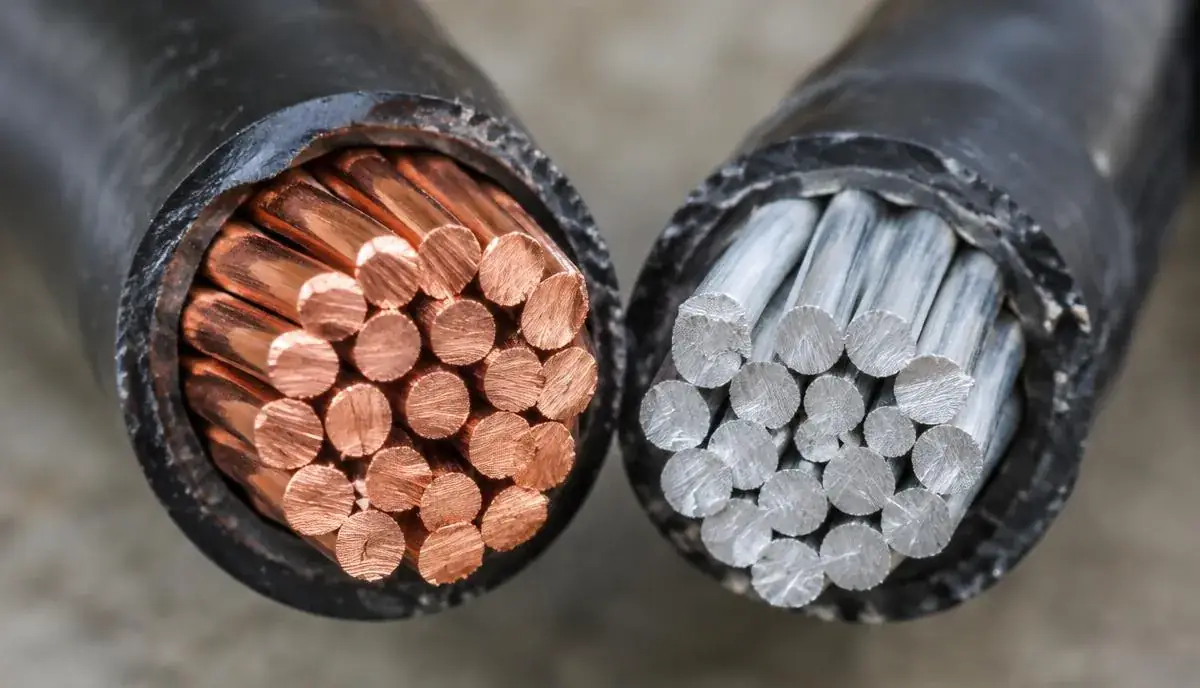
Cable is one of the most valuable types of scrap, but only if you know what is inside it. Copper and aluminum cables can look almost identical from the outside, yet copper is worth considerably more. Here is how to tell them apart quickly and safely.
The scratch test
Cut the end of a cable cleanly and look at the core, or lightly scratch a strand with a knife or a file. Copper shows a reddish-orange colour under the surface. Aluminum shows a bright silver-white colour. Tinned copper can look silver on the outside, so always scratch or cut into a strand to see the colour underneath.
The weight feel
Copper is roughly three times as heavy as aluminum for the same volume. Pick up two pieces of cable of similar thickness and length: the copper one will feel clearly heavier. This is not exact, but it is a useful first check when you have a large mixed pile.
Look at the colour and flexibility
- Copper strands are reddish and bend easily without breaking.
- Aluminum strands are silver-grey, often thicker for the same rating, and can snap if bent back and forth.
- Many cables are printed along the jacket with "CU" for copper or "AL" for aluminum, which is the easiest check of all.
Why it matters for price
Because copper is worth so much more than aluminum, mixing the two usually means the whole bundle is priced closer to the lower value. Sorting copper and aluminum cable into separate bundles is the simplest way to get the best price. It also helps to keep long lengths together and to separate thick power cables from thin data and telephone cables.
Do not burn the insulation
Some people burn cable to remove the plastic jacket. Do not do this. Burning cable releases toxic smoke, is dangerous to your health and to people nearby, and can be against the law. It can also damage the metal and lower its value. Buyers accept insulated cable and price it according to its type and the share of metal inside.
Before you ask for a quote
Sort the cable by material, estimate the weight or the number of drums or bundles, and take a photo that shows a cut end of each type. With that information, a buyer can give you an accurate price without guessing.